Velia Matteotti
M: Son of the CenturyVelia Matteotti is presented through the collision of domestic hope and political catastrophe: the melancholy, educated wife to whom Giacomo Matteotti wrote as his public world collapsed, and the woman who demanded his return and determined where he would be buried. Their letters make conjugal affection more than a refuge from politics. They preserve the ordinary life the couple had scarcely been able to share, while the events surrounding Giacomo’s disappearance turn Velia’s private grief into a public demand for truth, his body, and a burial at home.
Identity and Background
Velia Titta came from a well-off family and had been educated in Catholic schools. She was the younger sister of the celebrated baritone Ruffo Titta and the wife of Giacomo Matteotti. The account characterizes her as melancholy, a quality that later becomes more than a biographical description: her own writing makes sorrow feel less like a passing mood than a durable ground from which she can continue to hope.
The marriage joined two lives marked by sharply different kinds of exposure. Giacomo was a combative socialist politician, repeatedly separated from his family by public struggle and the precarious conditions of his life. In letters, he could describe that struggle as futile; Velia, by contrast, answered from the intimate scale of their shared life, giving importance to affection, a home, and the prospect of being together. The surviving portrait is therefore not simply that of a politician’s bereaved wife. It is also a record of the relationship through which the political crisis was experienced at its most personal.
Letters Amid Political Defeat
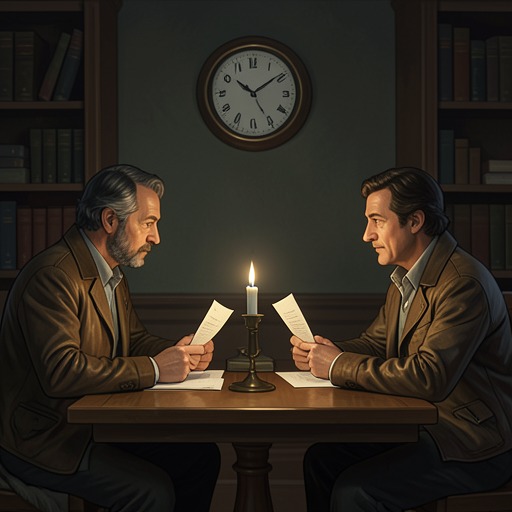
By the spring of 1922, discouragement had entered Giacomo’s letters. In a letter dated May 20, he wrote, “I BELIEVE THAT I will resign as deputy before long because it is all useless action and wasted effort. You are against the other parties; and yet your party does nothing that it should do. So what’s the use?” The question registers a collapse of confidence in political action, but his letters also locate what he fears losing beyond politics. On his thirty-seventh birthday, May 22, he wrote that he feared time passing above all because it took him away from Velia: “I think that it is perhaps the only thing I am irreparably losing.”
As the Fascist offensive intensified, his correspondence turned increasingly toward their marriage. He described Velia as his one true love and the person who had filled his heart. The movement from public struggle to private address does not mean that danger had receded. Rather, the letters set the threatened intimacy against a worsening political landscape. In June, Giacomo described his party as isolated, as if it were at sea with no one outside it able to sense the full tragedy. While socialist leaders disputed political strategy, administrations of the left fell across the country and workers were left without protection. Against that scale of abandonment, his letters to Velia insist on a bond that political defeat could not make meaningless.
The House They Hoped to Share
In October, with Fascist forces threatening Rome, Giacomo began looking for a house in the capital. He had long lived away from his loved ones, in hotel rooms and makeshift shelters, without a permanent home. His letter framed the search as a practical attempt to protect his family: “I want to protect the children, you and myself as well. Extreme sacrifices are pointless, they are of no help. Even if I had a house here in Rome I wouldn’t give the address to anyone.” The house would offer a measure of domestic shelter, but even this intention was shaped by the need for secrecy and danger.
By the end of the month, after the Fascists had marched on the capital, he reconsidered bringing Velia and the children into that peril. He wrote that he would have come to see her if the trains were departing again, so they could counsel one another, and said that the disturbances confirmed his earlier thought that she should not be in danger. He had even considered taking the family out of the country. The letters hold together two competing needs: to end their separation by making a home, and to keep his wife and children beyond the reach of the political crisis.
Velia’s reply gives that hoped-for home its most concrete form. She imagined “a bed of our own, a lamp of our own, a nice warm corner where we can spend a restful hour together and be able to talk quietly.” She acknowledged that Giacomo’s life had been miserable without domestic affection or material comfort, and that she had not been able to give him those things. Yet she ended not in resignation but in confidence that their separation would end and they would be united. The bed, lamp, and warm corner make their desire for a shared home specific: not grandeur or political safety, but the small comforts and quiet conversation repeatedly denied them.
Facing the Prime Minister
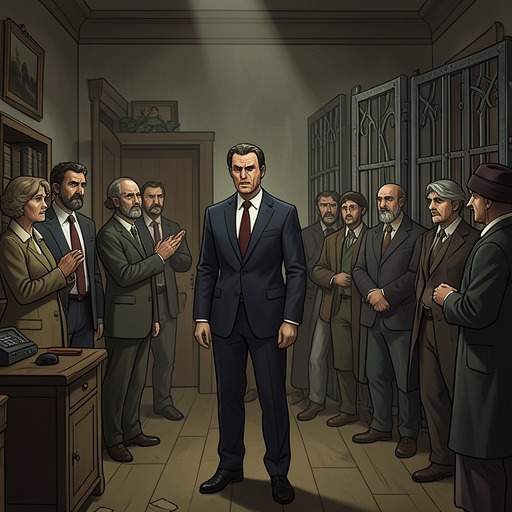
On June 13, after Giacomo’s disappearance, Velia went to the Chamber and asked socialist deputies to accompany her to see Prime Minister Benito Mussolini. Filippo Turati tried to dissuade her, but she persisted. The accounts of the meeting differ. In the regime press’s version, Mussolini received her at Palazzo Chigi, stood as she entered, and consoled her after she began to sob, promising that he wanted to return her husband alive and that the government would do its duty. Casimiro Wronowski, Giacomo’s brother-in-law, gives a different account of the circumstances: Velia and her sister Nella waited standing in the anteroom for a clerk to announce them.
In Wronowski’s account, Mussolini also received Velia standing, supported by undersecretaries Acerbo, Sardi, and Finzi. The scene turns on what she asks, not on any reassurance she receives. Velia requested that, if Giacomo was alive, he be allowed to return home, and that, if he was dead, his remains be returned to her for Christian burial. Mussolini answered, “I know nothing, signora; if I knew, I would return your husband to you, alive or dead.” The contrasting versions leave the meeting’s emotional staging disputed, but both place Velia before the head of government, asking for the same two things: her husband alive, or his body returned.
Burial and the Meaning of Home
When Giacomo’s remains were returned to the earth for the second time on August 21, 1924, Velia chose a burial in Fratta Polesine, his home region. She refused Turati’s proposal for a “political” burial in Rome’s Verano cemetery. Her decision redirected the funeral from the capital’s public political setting to the place of Giacomo’s origins, making the return home she had sought a geographical fact even after reunion with her husband was impossible.
The journey and burial carried unmistakably public grief. At Monterotondo station, peasants, laborers, and railway workers knelt along the tracks as the coffin departed. In Fratta Polesine, tens of thousands of mourning workers awaited it, crying for vengeance, justice, and retribution. The scene’s central figure, however, was not Velia but Giacomo’s elderly mother, whose grief accompanied the burial. Velia’s choice had brought his remains home; the crowd’s cries made that return a collective act of mourning and political remembrance.
Narrative Significance
Velia’s part in the account is defined by a persistent contrast between public failure and private fidelity. Giacomo’s letters register the exhaustion of a socialist struggle that seemed unable to protect its own supporters, yet they repeatedly return to the love and domestic life he feared losing. Velia’s letters answer political despair not with a political program but with a shared future imagined through everyday things. Their correspondence gives the crisis an intimate measure: time is not only the course of political events, but also what separates two people from a home they have not yet managed to make.
Her actions after Giacomo’s disappearance carry that private bond into public view. She disregards Turati’s attempts to turn her back from the meeting, confronts Mussolini with a direct request, and later rejects a political funeral in Rome in favor of burial in Fratta Polesine. The movement from the hoped-for house in Rome to the final return of Giacomo’s remains to his region is a grim reversal: the family cannot secure a shared domestic life, but Velia can insist on where his body belongs. In this way, the story presents her as more than the recipient of political violence. She is a witness and decision-maker whose claims of love, burial, and home remain visible amid competing efforts to define Giacomo’s disappearance and death.